

Industrial pump procurement is a decision with long-term consequences. A pump installed in a critical process application may be expected to operate reliably for ten, fifteen, or even twenty years. Choosing a supplier based primarily on short-term factors- the lowest initial price, shortest delivery time, or a familiar brand name- without investigating current manufacturing quality can result in a pumping installation that delivers years of maintenance problems, production losses, and total costs that dwarf the initial purchase price. Understanding what genuinely distinguishes reliable industrial pump dealers from commodity distributors is the starting point for making a better decision.
Technical Competence to Support Correct Specification
The most important quality in an industrial pump suppliers is the ability to ensure that the pump being purchased is correctly specified for the application it will serve. This requires genuine technical competence, not just the ability to read a pump curve, but the knowledge to evaluate how a fluid’s viscosity, density, temperature, and corrosivity affect pump selection, and how the pump will perform across the full range of operating conditions it will encounter in service.
A supplier who simply provides the pump size that fits the stated design flow and head, without asking about fluid characteristics, system curve variation, or operational flexibility requirements, is not providing the engineering support that critical pump applications require.
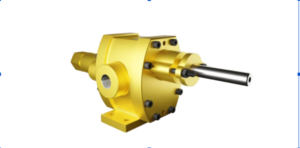
Product Range That Matches Real Application Diversity
Industrial facilities rarely have uniform pumping requirements across all their duties. A reliable supplier should offer a diverse portfolio of pumping solutions, including rotary gear pump systems, designed to handle varying flow rates, pressures, fluid viscosities, operating environments, and long-term performance requirements:
- Centrifugal pumps across a wide range of flow and pressure duties
- Positive displacement types including rotary gear pump, diaphragm, and screw configurations
- Metering and dosing pumps for precise chemical injection
- Specialist pumps for challenging fluids, slurries, viscous materials, corrosive chemicals
A supplier whose product range is narrow may push the customer toward a product that is not ideally suited to the application, simply because it is what they have available.
Quality Standards and Traceability
For industrial pump applications, particularly in oil and gas, chemical, and water treatment sectors, quality documentation is not a bureaucratic formality, it is a genuine requirement for process safety and regulatory compliance.
Reliable industrial pump suppliers should routinely provide:
| Quality Document | Why It Matters |
| Material test certificates | Confirms that wetted part materials meet specifications. |
| Hydrostatic test records | Confirms pressure containment integrity |
| Performance test curve | Validates that the pump delivers specified flow and head |
| Dimensional inspection report | Confirms correct manufacturing to drawing |
| Compliance certificates (ATEX, CE) | Confirms suitability for intended installation environment |
Suppliers who make these documents difficult to obtain, or who cannot provide them without special requests, are demonstrating that their quality processes are not as robust as they should be.
Spare Parts Availability and Lead Times
The most reliable pump will eventually require maintenance, seals wear, bearings fatigue, impellers erode. When maintenance is required, spare parts availability determines whether a pump is back in service within hours or out of service for weeks while parts are procured from a distant factory.
Reliable industrial pump suppliers maintain:
- Stocked spare parts for their most common pump models, available for immediate dispatch
- Clear lead time information for non-stocked items, with realistic commitments
- Bill of materials and spare parts documentation provided with every pump delivery
- Recommended spare parts kits for different maintenance intervals
For critical plant applications, understanding the spare parts commitment of a pump supplier before purchase, not after a breakdown, is essential.
Local Technical Support
Being able to speak to a knowledgeable engineer about a pump problem, not a call centre operative reading from a script, is a quality that becomes invaluable when something goes wrong. Reliable industrial pump suppliers offer technical support from people who know the product range and can diagnose problems, recommend corrective action, and mobilise field service support when on-site assistance is required.
Track Record and References in Relevant Industries
A supplier’s track record in the specific industry sector and application type being considered is one of the most reliable indicators of future performance. References from existing customers in comparable applications, willingness to arrange plant visits or provide contact details for reference customers, and demonstrated experience with the specific process conditions involved all support a more confident procurement decision.
Conclusion
Reliable Industrial Pump Dealers earn that designation through technical competence, product range, quality standards, spare parts support, and local technical capability, not simply through offering the lowest price on a catalogue product. For industrial facilities where pumping system reliability is central to operational performance, investing time in proper supplier evaluation before procurement consistently produces better long-term outcomes. NND Oil & Gas provides industrial pump supply and application engineering support across oil and gas, water treatment, and process industry applications, combining a comprehensive product range with the technical knowledge that correct specification and long-term support require.